PTUK Course (1): Solar Energy Systems (renewable energy)
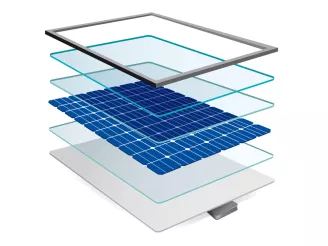
A photovoltaic (PV) cell main components
1. Semiconductor Material (Typically Silicon)
The core of a PV cell is made of a semiconductor material, usually silicon. This material is responsible for absorbing sunlight and converting it into electrical energy. When sunlight strikes the semiconductor, it excites electrons, creating electron-hole pairs that are essential for generating an electric current.
2. P-N Junction
The PV cell is composed of two layers of semiconductor material with different electrical properties: the p-type (positive) layer and the n-type (negative) layer. The interface between these two layers forms the p-n junction, which creates an electric field that drives the movement of electrons, generating a current when the cell is exposed to sunlight.
3. Front Contact (Electrode)
The front contact is a grid-like metal layer placed on the surface of the cell that faces the sun. Its function is to collect and conduct the electrons generated by the PV cell to an external circuit while allowing sunlight to pass through to the semiconductor material.
4. Back Contact (Electrode)
The back contact is a metal layer on the rear side of the PV cell. It serves as the return path for the electrons to complete the electrical circuit. Together with the front contact, it helps in creating a complete electrical pathway for the current generated by the cell.