
Module 3: Mineral Nutrition of Plants
-
Module 3: Mineral Nutrition of Plants
-
Students mustMark as done
Module 3: Mineral Nutrition of Plants
-
Students mustMark as done
First Idea: Plant Nutrition
-
Students mustMark as done
Module Description
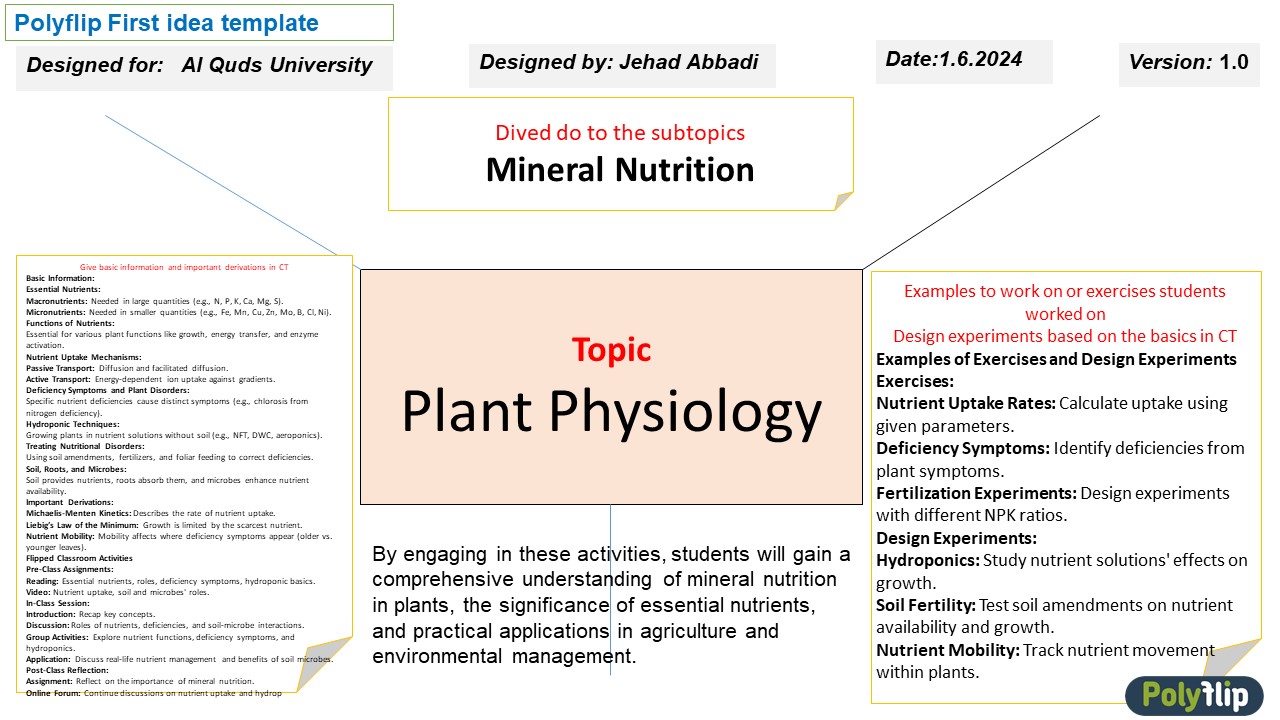
This module explores the fundamental concepts of mineral nutrition in plants, focusing on how plants absorb and utilize essential mineral elements from the soil for growth and development. Students will learn about the roles of macronutrients and micronutrients, nutrient uptake mechanisms, deficiency symptoms, and the latest hydroponic techniques for efficient nutrient management. The module emphasizes both theoretical knowledge and practical applications, providing a comprehensive understanding of how plants manage their nutritional needs and how these can be optimized in agricultural practices.
-
Students mustMark as done
Key Concepts:
Essential Nutrients:
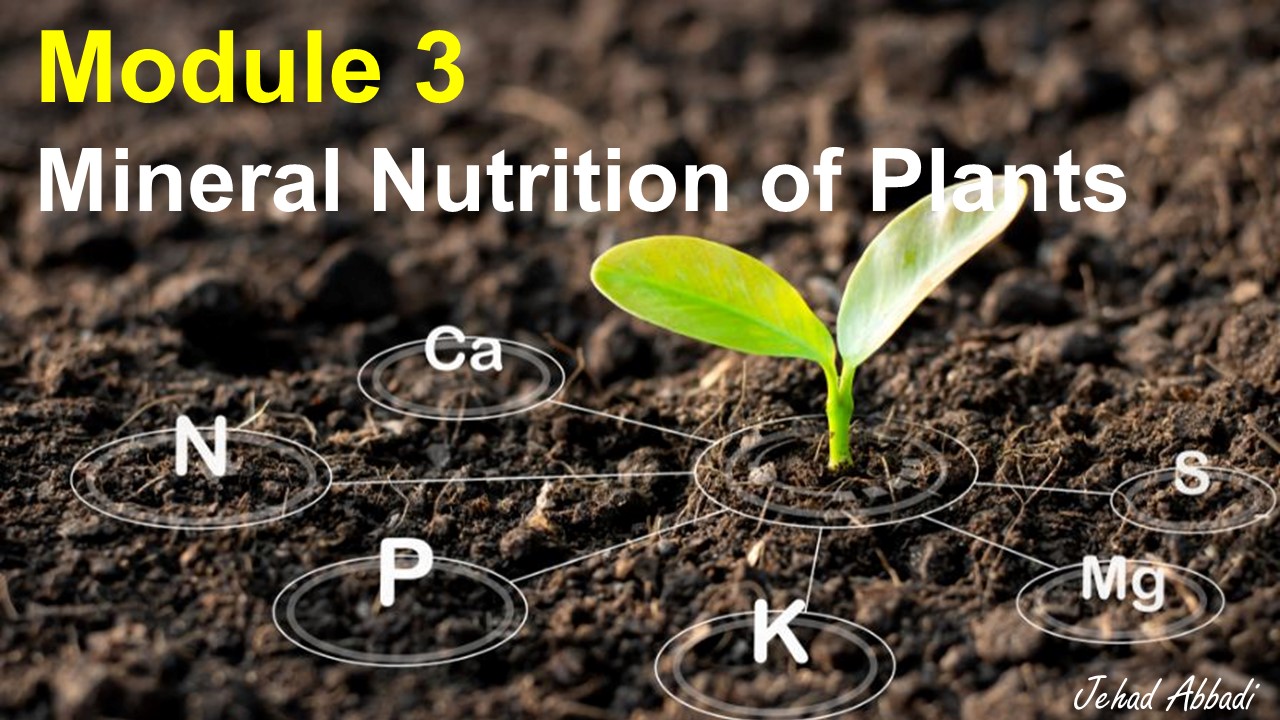
- Macronutrients: Required in large amounts, including nitrogen (N), phosphorus (P), potassium (K), calcium (Ca), magnesium (Mg), and sulfur (S). Each plays a crucial role in plant structure, metabolism, and growth.
- Micronutrients: Needed in smaller quantities, such as iron (Fe), manganese (Mn), copper (Cu), zinc (Zn), molybdenum (Mo), boron (B), chlorine (Cl), and nickel (Ni). Despite their lower concentration, these nutrients are vital for various biochemical functions.
Functions of Nutrients:
- Nitrogen (N): Central to the synthesis of amino acids, proteins, nucleic acids, and chlorophyll, essential for plant vitality and growth.
- Phosphorus (P): Critical for energy transfer (ATP), nucleic acid formation, and as a component of cell membranes.
- Potassium (K): Regulates osmotic balance, activates enzymes, and controls stomatal function for gas exchange.
- Calcium (Ca): A structural element in cell walls and an important player in cell division and signaling.
- Magnesium (Mg): The core atom in chlorophyll, aiding in photosynthesis, and an important cofactor for enzymatic activity.
- Sulfur (S): Integral to amino acids like cysteine and methionine, as well as certain vitamins and enzymes.
Nutrient Uptake Mechanisms:
- Passive Transport: Nutrients move into plant roots through diffusion and facilitated diffusion along their concentration gradient.
- Active Transport: Energy-dependent process allowing plants to absorb ions against their concentration gradient, ensuring an adequate nutrient supply.
Deficiency Symptoms and Plant Disorders:
- Nitrogen Deficiency: Causes yellowing (chlorosis) of older leaves due to impaired chlorophyll production.
- Phosphorus Deficiency: Results in stunted growth and dark green or purplish leaves.
- Potassium Deficiency: Leads to marginal chlorosis and necrosis along the edges of leaves.
- Calcium Deficiency: Causes blossom-end rot in tomatoes and necrosis in young tissues.
- Iron Deficiency: Exhibits interveinal chlorosis, particularly in young leaves.
Hydroponic Techniques:
- Introduces methods of growing plants in nutrient solutions without soil, offering precise control over nutrient delivery. Techniques such as the Nutrient Film Technique (NFT), Deep Water Culture (DWC), and Aeroponics will be explored, highlighting their applications in sustainable agriculture.
Treating Nutritional Disorders:
- Discusses practical methods for correcting nutrient deficiencies, including soil amendments (e.g., lime or organic matter), fertilizer applications, and foliar feeding (spraying nutrients directly onto leaves for immediate uptake).
Soil, Roots, and Microbes:
- Explores the complex interactions between soil, plant roots, and beneficial soil microbes (e.g., mycorrhizal fungi and nitrogen-fixing bacteria) that enhance nutrient availability and support plant health.
Learning Objectives:
By the end of this module, students will:
- Understand the roles and functions of essential macronutrients and micronutrients in plant growth.
- Identify nutrient deficiency symptoms and recommend appropriate corrective measures.
- Demonstrate knowledge of modern hydroponic systems and their benefits for nutrient management.
- Appreciate the symbiotic relationships between roots, soil, and microbes in facilitating nutrient uptake.
This module will integrate both theoretical lectures and hands-on experiments, providing students with a solid foundation in plant mineral nutrition and its applications in agriculture.
-
Students mustMark as done
Intended Learning Outcomes (ILOs):
ILO 1: Define the key concepts of mineral nutrition, including macronutrients and micronutrients, and their importance for plant growth.
ILO 2: Describe the functions of essential nutrients (e.g., nitrogen, phosphorus, potassium) and how they contribute to plant development and metabolism.
ILO 3: Identify common nutrient deficiency symptoms in plants and relate them to specific nutrient imbalances.
ILO 4: Apply knowledge of nutrient functions and deficiencies to diagnose and recommend corrective measures for nutrient disorders in plants.
ILO 5: Demonstrate the ability to set up and manage a basic hydroponic system to control nutrient delivery to plants.
ILO 6: Analyze different nutrient uptake mechanisms (passive vs. active transport) and evaluate their roles in plant health and nutrient acquisition.
ILO 7: Investigate the relationship between soil composition, root structures, and microbial interactions in the enhancement of nutrient uptake.
ILO 8: Design an experiment to test the effects of different nutrient concentrations on plant growth and development using hydroponic techniques.
ILO 9: Critically evaluate the effectiveness of various fertilizers, soil amendments, and foliar feeding techniques for correcting specific nutrient deficiencies in different plant species.
ILO 10: Assess the role of sustainable agricultural practices, such as using mycorrhizal fungi and nitrogen-fixing bacteria, in improving nutrient availability and promoting long-term soil health.
These ILOs cover a range of cognitive levels, ensuring a comprehensive understanding of mineral nutrition in plants, from basic concepts to higher-order critical thinking and application.
-